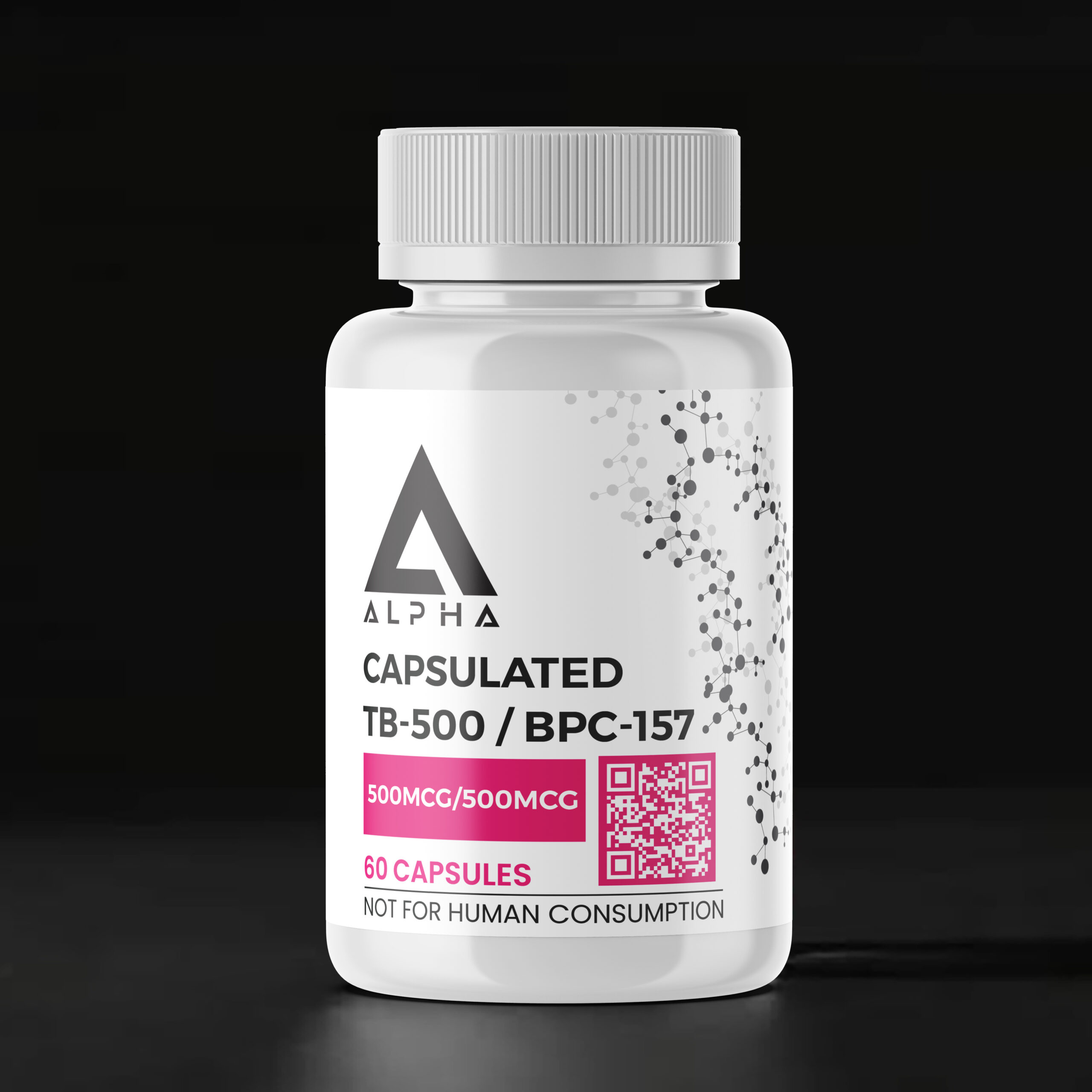
Capsulated TB-500 & BPC-157 — Dual Peptide Research Formulation
Overview
TB-500 & BPC-157 Capsules combine two extensively studied peptide compounds into a single research formulation designed for laboratory investigations into tissue-response signaling, cellular repair pathways, and structural adaptation mechanisms. This dual-peptide system allows researchers to explore how complementary peptide signaling pathways may interact within controlled experimental environments.
By pairing TB-500, a peptide associated with cellular migration and cytoskeletal organization, with BPC-157, a peptide studied for its role in tissue-response signaling, this formulation provides a framework for evaluating coordinated cellular repair and regenerative pathway activity.
Scientific Background
TB-500 is a synthetic peptide derived from thymosin beta-4 and is frequently studied in laboratory models for its involvement in cell migration, actin regulation, and tissue structural signaling.
BPC-157 is a peptide fragment originally investigated in experimental models examining tissue-response signaling, angiogenic pathways, and cellular resilience mechanisms.
Together, these peptides are commonly explored in research focusing on structural repair signaling, connective tissue models, and regenerative pathway activity.
Key Research Areas
• Tissue-response and repair signaling models
• Cellular migration and actin regulation studies
• Connective tissue signaling pathways
• Angiogenic and structural adaptation research
• Multi-peptide interaction models
Key Specs
Form: Encapsulated research formulation
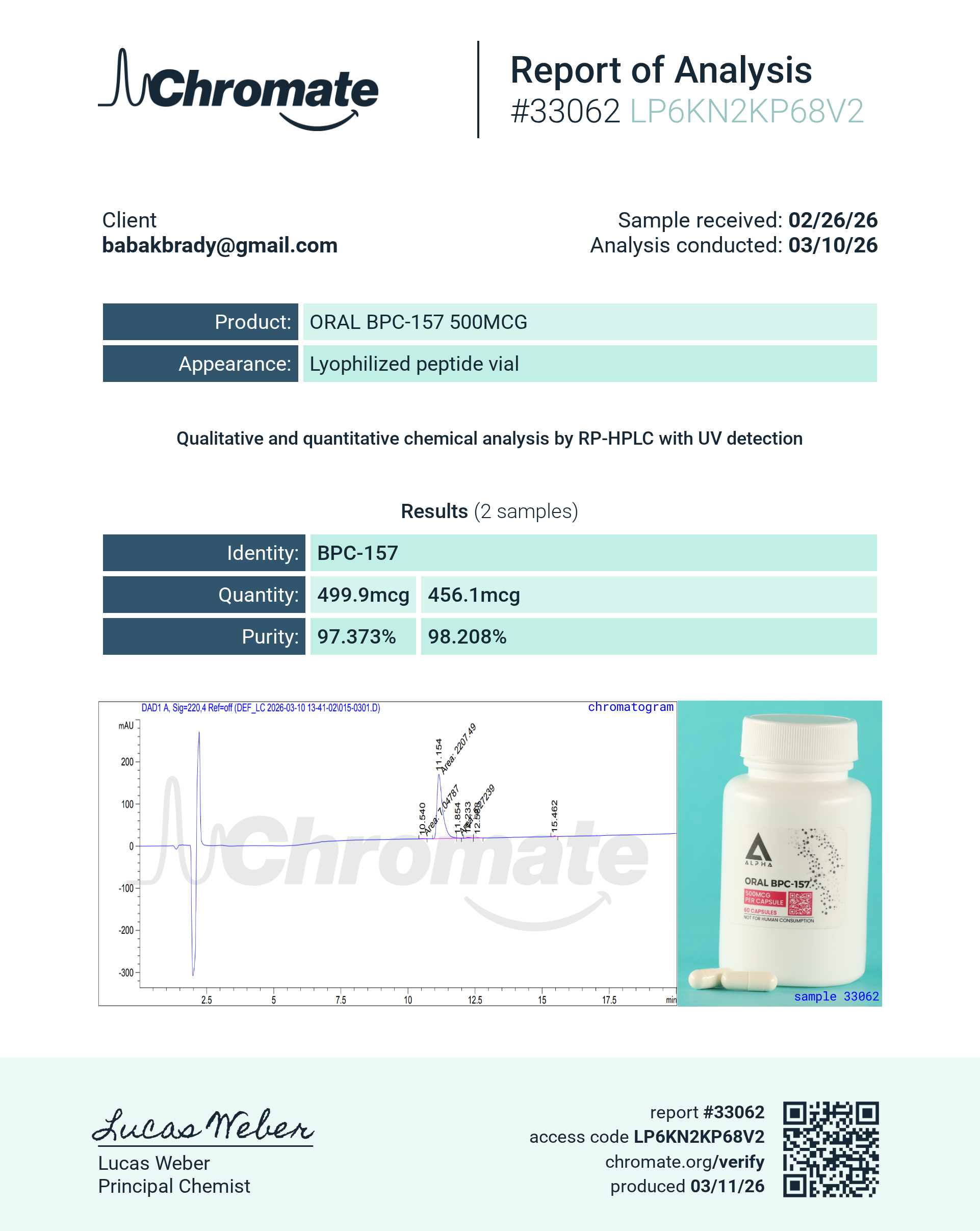
Purity: ≥98% peptide purity (HPLC)
Appearance: White capsules containing research-grade peptide material
Storage: Store in a cool, dry environment away from heat and moisture
🔬 For laboratory research use only. Not for human consumption.